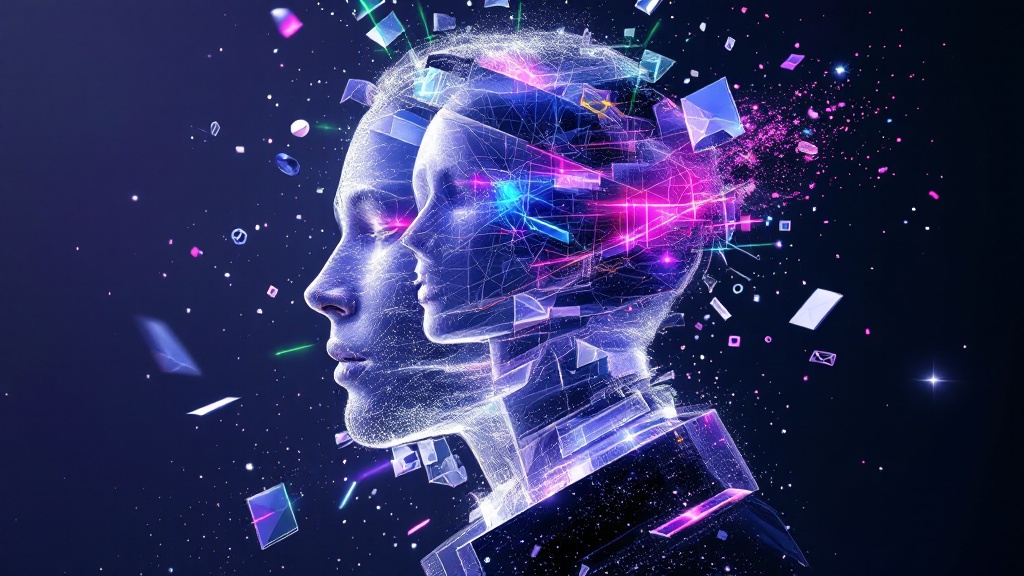
AI-generated headshots are triggering an “uncanny valley of professionalism” effect, making it harder than ever to stand out with authenticity in 2026.
The stakes are rising as AI moves from novelty to backbone: 2025 marked the shift from experimentation to structured enterprise deployments (techradar.com). Now, synthetic influencers and algorithmic sameness are reshaping what “personal” means—ready or not.
Brand Authenticity Is Under Threat from AI Homogeneity
AI-generated content often leads to brand homogeneity, with similar language, visuals, and campaign structures. According to youngurbanproject.com, the challenge of standing out has become acute as more personal brands churn out content using popular AI tools. This isn’t just a theory—the tools are everywhere. ChatGPT, Claude, Midjourney, Descript, Canva, Notion AI, HubSpot, and Buffer now drive scaled content creation for a growing wave of AI-powered personal brands (startupik.com).
The result? Audiences get deja vu: similar phrasings, the same mid-tone colors, and visuals that blend together. The sameness problem extends to AI-generated headshots, with kahma.io describing the “uncanny valley of professionalism.”
Actionable Solution:
To resist the pull toward homogeneity, inject personal stories, analogies, or perspectives only you can provide. Use AI for structure, but always finish with a human fingerprint—edit, inflect, and occasionally break the pattern. That’s the part nobody can automate.

Most People Get This Wrong: AI Alone Can’t Deliver Authentic Personality
A survey of 1,200 content creators shows 57% are concerned that AI-generated content lacks personality (navgood.com). The misconception that AI can fully replace human creativity endures, but if you’ve ever scrolled through an AI-generated feed, you know the result: a bland, forgettable stream.
AI, whether it’s ChatGPT or Claude, can output grammatically pristine content. What it can’t do is synthesize lived experience, human quirks, or emotional nuance. Even AI-generated music is at risk of sounding generic or too close to existing works, opening up copyright headaches (creativebloq.com).
Actionable Solution:
Create a repeatable review layer where content passes through your own filter for personality and insight. Prompt AI with your own stories, values, and experiences to anchor output in genuine voice. Even a single sentence of lived reality can break the pattern of sameness.
→ See also: What is Personal Branding
The Data Shows: Synthetic Influencers Challenge Human Authenticity
The emergence of synthetic influencers—fully AI-generated personalities—has moved beyond experiment into serious competition. pettauer.net notes that these entities now contest the idea of authenticity at the heart of personal branding.
Synthetic influencers can publish at inhumanly high frequency, always on-message, never tired or inconsistent. This raises the bar for real humans who, inevitably, have off days, missteps, and unpredictability. The flood of AI-generated content forces audiences to question what is real and who is behind the persona.
Yet, the paradox is that audiences still crave a genuine connection. The very perfection of synthetic influencers can be a weakness: people value vulnerability and idiosyncrasy. There’s no quick fix, but realness is now a strategic differentiator.
Actionable Solution:
Audiences want to know the human behind the brand. Lean into transparency about your process and limitations. Show behind-the-scenes moments or admit when you’re experimenting—that’s the dimension that AI personas can’t truly fake.

Visibility and Governance Are Major Issues in AI Personal Branding
64.5% of activities on personal and free AI accounts are work-related (techradar.com). This is a governance nightmare: companies don’t know what their people are doing with AI, and personal brands risk crossing lines between public, private, and proprietary domains.
There’s a temptation for creators to use free or personal AI tools for work content, but the boundaries are blurry. Is that midjourney-generated image company IP or personal property? Who owns a Notion AI content draft if it was made on a private laptop?
Actionable Solution:
Establish clear standards for which AI accounts and tools are used for what purpose. If you’re building a personal brand in parallel with professional work, separate the workflows, document ownership, and—if relevant—clarify with your employer. You don’t want a governance gap turning into a legal fight.
The Shift from SEO to Generative Engine Optimization (GEO) Demands New Tactics
The shift from SEO to Generative Engine Optimization (GEO) is a significant change in personal branding strategies (thebrandingcorner.com). SEO strategies that focused on Google search are being replaced by tactics designed for AI-powered answer engines. The difference is not just technical; it’s philosophical.
Traditional SEO rewarded consistency, keywords, and domain authority. GEO, in contrast, is about feeding AI engines with semantically rich, original, and well-attributed content that trains models to recognize your perspective as a reliable answer source. The hack of 2016—keyword stuffing—is now a surefire way to vanish into the digital void.
Actionable Solution:
Audit your web presence in 2026 for GEO readiness: Are your answers direct, specific, and data-supported? Can an AI pull a complete answer from your content in 40-60 words? That’s the game now.

→ See also: Beginner's Guide to Integrating Ai Into Personal Branding
The Black Box Problem Undermines Trust in AI-Driven Personas
The "black box" problem in AI systems creates a major trust gap. Many marketers and creators don’t understand how their AI tools generate insights or define personas, according to marketinginsidergroup.com. Without insight into which variables drive AI outputs, it’s easy to lose control of your own narrative.
You’ll notice the irony: AI promises to personalize at scale, yet the more you hand over, the less you know about how your brand is being shaped behind the scenes. If you can't explain why your AI persona is recommending a particular angle or tone, how can you own your personal brand?
"AI is valuable for exploring musical ideas, remixing existing audio assets, and speeding up user testing, but it still requires human guidance to ensure brand alignment and emotional resonance." — creativebloq.com
Actionable Solution:
Demand transparency from your AI tools. Where possible, use platforms like Descript and Canva that allow step-by-step review and override of AI decisions. Document your brand values and make sure they’re explicitly referenced in your prompts, not just assumed by the algorithm.
Copyright and Ownership Issues Cloud AI-Generated Content
AI-generated content is plagued by questions of ownership and copyright—especially acute in fields like music and visual media. As creativebloq.com notes, music created entirely by AI may fall into the public domain, and the risk of accidental plagiarism rises as AI recombines existing material.
The legal frameworks in 2026 are still murky. If you use Midjourney to generate an image for your brand, do you actually own it? If your AI-generated jingle sounds like a famous pop song, is it copyright infringement?
Actionable Solution:
Always check the license terms for any AI tool—ownership isn’t guaranteed by default. If uniqueness matters (and it does), post-edit AI outputs and run them through copyright checks. For high-stakes assets, blend AI with human modification so the result is truly yours.
Side-by-Side: AI Tools for Personal Branding (2026)
| Tool | Function | Key Feature |
|---|---|---|
| ChatGPT | Text Generation | Conversational content creation |
| Claude | AI Assistant | Task automation, research |
| Midjourney | Image Generation | Text-to-visuals for branding |
| Descript | Audio/Video Editing | AI-powered media workflow |
| Canva | Design | AI-assisted visual templates |
→ See also: Ai-driven Content Creation for Personal Branding
FAQ — Emerging Challenges in AI Personal Branding and Solutions
How can I make my AI-generated content feel less generic?
Are AI-generated headshots a risk for personal branding?
What is Generative Engine Optimization (GEO) and why does it matter?
Who owns the copyright to AI-generated content?
Why This Actually Matters in 2026
Every shortcut comes with a price. The allure of automation is strong—who doesn’t want scale, speed, and endless content? But the invisible cost is your uniqueness, your insight, your brand’s soul. In 2026, the brands that stand out will be the ones that go back to the basics: originality, transparency, and a voice that no machine can replicate. AI is not the enemy. It’s a tool—sometimes helpful, sometimes risky, always demanding a human touch. The only real failure is to settle for sameness.


Comments 0
Be the first to comment!